Posted on Leave a comment

Herbal candles

Herbal Candles: Use and Creation

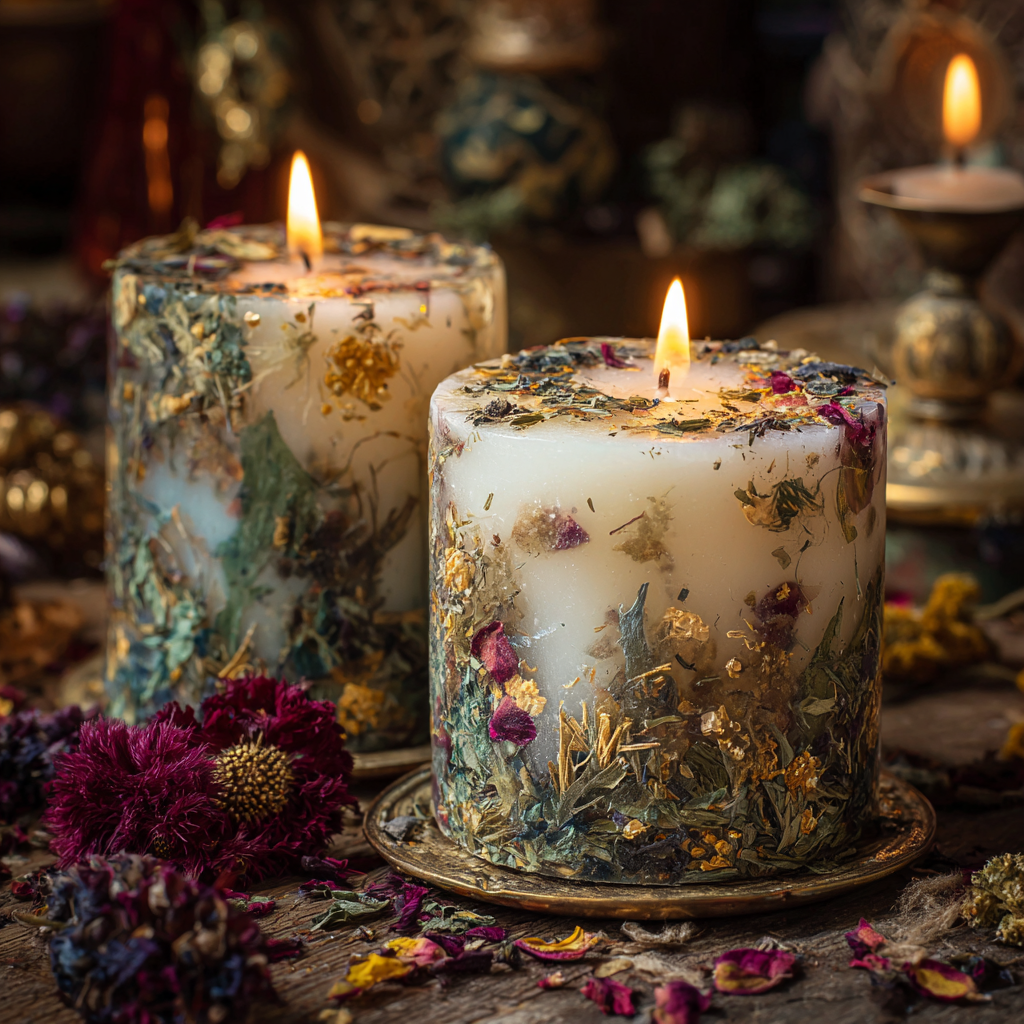
Herbal candles, often called “witch’s candles,” are designed for spiritual use, especially for cleansing and healing. These candles don’t use a traditional wick and may produce a vivid flame and noticeable smoke. Because of that, it’s best to burn them in well-ventilated spaces.

They’re crafted using beeswax and specific herbs chosen according to the goal of the ritual or intention.

Sourcing Ingredients

Beeswax on its own holds powerful natural energy. It’s energetically similar to quality incense and helps create a calm, purified space.

The best wax is raw and unprocessed — you can usually find it at local honey markets or buy it directly from beekeepers. Wax sold in soap-making stores may be refined multiple times, which strips away both its scent and much of its natural potency. A good-quality beeswax will smell like honey and snap easily when struck.

When it comes to herbs, the most potent are those you gather yourself. Certain days of the year — like early morning on May 1st, June 19th, or the summer solstice — are traditionally believed to enhance the magical strength of plants. It’s said that only one herb should be picked on such days to preserve its spiritual power.

That said, herbs can be collected whenever needed, especially during the waxing moon. Buying herbs is also acceptable, provided they’re high-quality and properly dried. Even simple herbs can carry strong energy if gathered and stored with care.
How to Make Herbal Candles

There are two basic ways to make herbal candles: by melting and casting the wax, or by rolling sheets of beeswax.

Casting Method

Gently melt beeswax in a double boiler setup to avoid scorching.

While it’s melting, grind your chosen herbs into a fine powder using a mortar or grinder. A common proportion is 2 parts wax to 1 part herb.

Prepare a mold. Candle molds work well, but you can also create a simple one by rolling glossy magazine paper into a cone.

Stir the herbs into the melted wax and pour the mixture into your mold.

Let it cool completely until solid. The candle is then ready for use.

If this is your first time making a candle, you may choose to add a wick to the center for easier lighting.

Rolling Method

Take a sheet of beeswax (often sold as foundation wax for beekeeping) and warm it slightly until it becomes pliable but not sticky.

If you’re using a wick, press it gently along one edge.

Grind your herbs finely and use a brush to spread the powder across the wax sheet.

Starting from the wick edge, roll the sheet tightly into a candle shape.

Once finished, your candle is ready to be used.

Choosing the Right Herbs

Herbal candles are mostly used for energetic cleansing and recovery work. Certain herbs are especially useful for clearing negativity and strengthening health:

St. John’s wort, Mugwort, Juniper, Cedar, Valerian, Cinnamon, Lemon peel, Mint, Rosemary, Sage, Eucalyptus, Garlic, Lavender, Nettle, Meadowsweet, Parsley, Anise

You can also combine herbs depending on your intention. Here are some tried-and-true pairings:

For restful sleep: St. John’s wort + mint

For protection: mugwort + thistle

For luck and success: clover + horse chestnut flower

For offerings to spirits: basil + oak leaf

For love: lily petals + orange peel

For dreamwork: marigold + mugwort

For wealth: clover + mint

For spiritual defense: caraway + aspen leaf

For healing: thyme + St. John’s wort

For wisdom: sunflower petals + sage

How to Use the Candle for Smoke Cleansing

Before lighting, place the candle on a stable holder. Since beeswax is soft, you can press the base slightly to secure it.

If you’re using it indoors, open a window to allow the smoke to circulate and exit.

Light the candle either at the tip or at the herbal surface layer. When cleansing a space, begin at the entrance and move clockwise along the walls, guiding the smoke gently into corners and through open doorways.

To cleanse a person, use a feather or your hand to waft the smoke over their body. Traditionally, the smoke is directed first to the chest, then to the head, and finally to the feet. Then, the entire body is passed through the smoke three times, moving counterclockwise.

This process can help release stagnant energies and restore a natural sense of harmony — whether you’re clearing a space, a body, or a ritual object.

Posted on Leave a comment

How to Study Runes on Your Own

How to Study Runes on Your Own

Many people wonder whether it’s possible to learn runes independently—without enrolling in schools of rune magic—and what it actually takes to do so.

With the growing popularity of runic studies, a flood of “teachers” and “schools” has appeared, making it harder than ever to find truly knowledgeable instructors or trustworthy courses rooted in authentic runology. And no, I do not advertise myself and do not teach runes for now.

So here’s a set of foundational guidelines to help anyone considering this path.
To begin with: anyone approaching runes seriously should know the myth of how Odin gained them. The Allfather undertook immense personal sacrifice to unlock the mysteries of the runes—an account found in the Poetic Edda and, to a degree, in the Prose Edda.

Thankfully, modern seekers aren’t expected to hang upside-down for nine nights on the World Tree, pierce themselves with a spear, or trade an eye for a sip from the Well of Wisdom.
What is required today is far simpler: reading and absorbing the wisdom already recorded by others—on what runes are, what they mean, and how they function both magically and spiritually.

If your only exposure to runes has come through diluted or misleading divinatory summaries—often scattered across websites that have little to do with true runology—the first step is to clear your mind of that noise. The magical depth of runes goes far beyond fortune-telling. Their meanings are much richer, more layered, and deeply interconnected.

Each learner absorbs information differently. So instead of a single path, consider exploring multiple trusted sources. Here are some authors to build a foundation: Anton Platov, Freya Aswynn, Sergey Batyushkov, Kenneth Meadows.

From these, you can start forming your own system of understanding—how runes feel to you and how they fit into your worldview.
Keep in mind, however: no single book will provide the full picture. To grasp the runes in any depth, you’ll need to compare different perspectives, reflect on them, and build a personal, coherent vision. The viewpoints may differ—sometimes even contradict—but taken together, they allow you to understand.

Alongside your study of runes, immerse yourself in Norse mythology and folklore. Read the Eddas, explore the sagas, and study the Northern Tradition. The runes are inseparable from that cultural and spiritual context. Without understanding the Norse gods, the World Tree, and the Nine Worlds, your progress will be limited.

Once you’ve gained this foundation, you can approach more advanced authors like Guido von List, whose works demand prior knowledge. Later, you might also explore writings by Edred Thorsson and Ralph Blum, which offer different perspectives useful for broadening your understanding.

As your knowledge grows, you’ll develop your own grasp of runes—how they correspond to phonetic and symbolic systems, how to read inscriptions, how to understand formulas and staves. Some may even learn to craft their own runic combinations.

Eventually, you’ll begin to feel the runes—especially once you start working with them hands-on. This could involve making your first rune set, practicing with individual runes, then moving on to three-rune formulas, bindrunes, and staves. From there, you may learn how to activate them, charge them with intent, compose runic poems, write intent texts, and create runic spells.

With time and dedication, and if you also master the eight key skills of the eryl described in the Sayings of the High One, you may become a genuine practitioner of rune magic.

A Word of Caution…
True mastery doesn’t come quickly. You won’t fully understand runes in a month—or even a year. Like any profound craft, serious runic study takes years of work. A true runemaster is someone who has made runes part of how they think, how they see the world—in essence, a way of life.

That said, you can begin practical work once you have a basic foundation. Start small: use individual runes, or simple formulas and bindrunes—but only if you understand the components involved. Even a single rune, used wisely, carries immense power.

Avoid working with complex staves or multilayered intentions early on, especially if they require detailed intent texts or multiple stages of activation. Without enough energy or understanding, they simply won’t work—or worse, might backfire.

Be especially careful with staves that include unfamiliar elements like glyphs. You must know what each part does. Using something you don’t understand—especially without proper diagnosis—can be risky. In the worst case, it can harm you.

Never attempt to harm others through runes unless you know how to shield yourself from the backlash. Safety practices are essential. Disregarding them can have serious consequences.

One last note: runes are kind to beginners at first—they may even seem to “help along” your first steps. But don’t let that early success fool you. If you stop growing, the runes may stop responding. They demand commitment.

Wishing you success on your journey.

Posted on Leave a comment

Litha's Altar Herbs

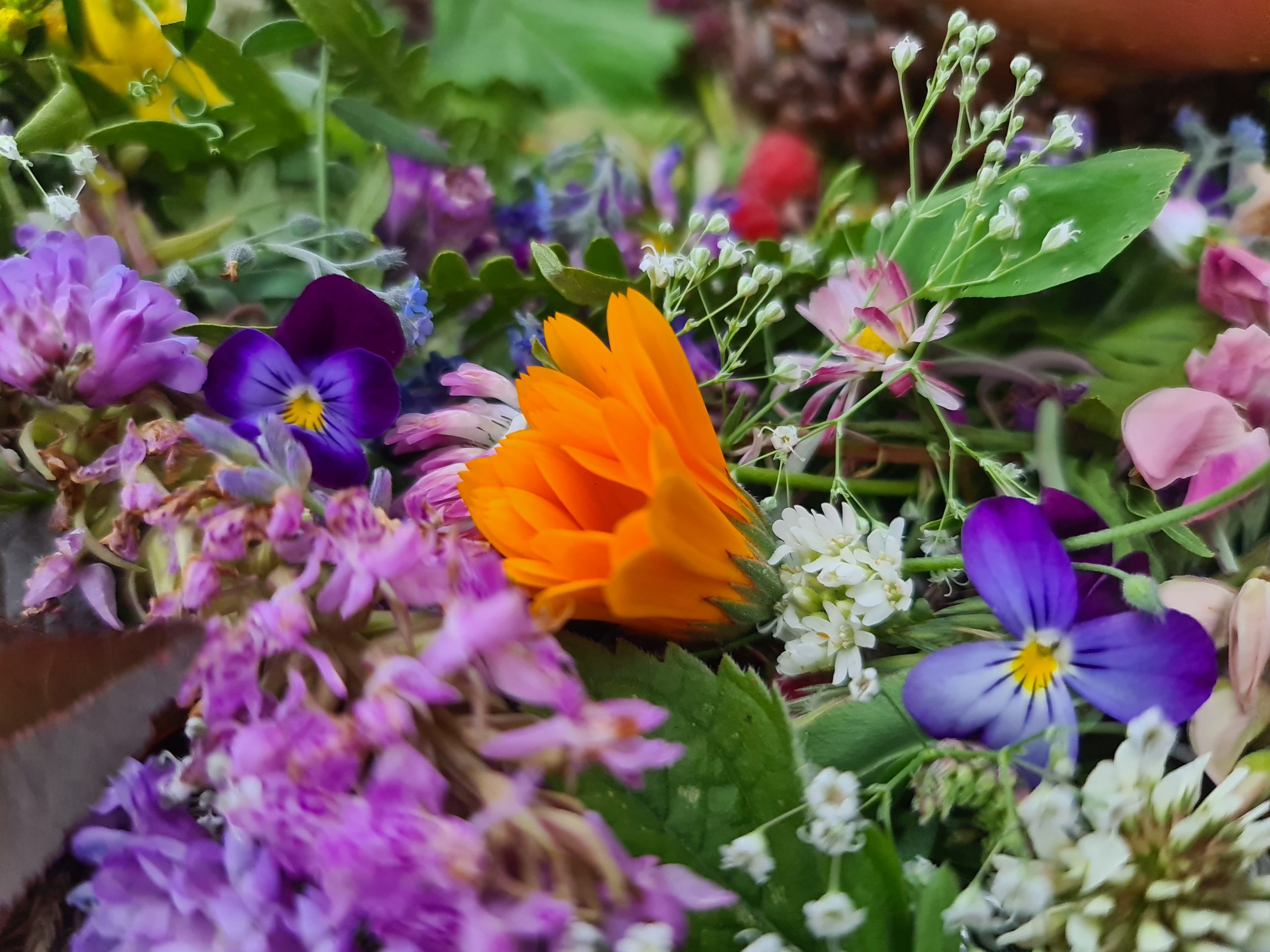
I’ve spent the whole day gathering herbs for Litha’s altar. Every time it’s unique and I feel magic is thick in the air. Let me tell you of these few simple, but magical herbs.

  • Lavender: Ah, the sweet scent of lavender, known to calm the restless heart and soothe troubled minds. Use it in your love and healing spells, to foster peace and bring restful sleep. Sprinkle dried lavender upon your altar or blend it into incense and sachets.
  • Rosemary: A guardian of our homes, rosemary stands for protection and purification. Burn its fragrant branches to cleanse your space, weave it into rituals for mental clarity, or tuck it into charm bags to ward off negativity.
  • Chamomile: With the warmth of the sun in its petals, chamomile brings prosperity and luck. Brew a tea of chamomile to invite abundance, or scatter its dried flowers in your spell work for relaxation and success.
  • St. John’s Wort: A stalwart protector, St. John’s Wort defends against evil spirits and negativity. Hang it above your doorways or carry it with you to imbue your spirit with protection and courage.
  • Yarrow: A herb of love and divination, yarrow heightens psychic powers and romance. Use it in love charms to attract a sweetheart or deepen an existing bond, and include it in divination rituals to sharpen your inner sight.
  • Pansies: These colorful blooms are symbols of love and remembrance. Use them in spells to mend a broken heart or to remember loved ones. Their vibrant energy will lift your spirits and brighten your altar.
  • Fireweed: With its fiery blossoms, Blooming Sally brings energy and transformation. Use it to ignite passion and drive in your life, especially during times of change.
  • Blackcurrant Leaves: These leaves are powerful allies in spells of health and wealth. Brew them into a tea to invite prosperity, or use them in sachets to bolster your vitality.
  • Strawberry Leaves: Symbolizing love and luck, strawberry leaves are perfect for charms aimed at attracting affection and good fortune. Scatter them in your garden or carry them with you to invite sweetness into your life.

Which herbs have you chosen for your Litha’s altar this year?

#litha #summersolstice #herbalmagic #witchcraft #paganherbs #lithaaltar

Posted on Leave a comment

Litha, The Summer Solstice

Well, hello, our magical friends! Do you celebrate Litha?

As the wheel of the year turns, we approach one of the most vibrant and powerful Sabbats: Litha, the Summer Solstice! Celebrated around June 21st, Litha marks the longest day and the shortest night of the year. This is a time when the sun is at its peak, bathing us in warmth and light, and nature is in full bloom.

The Significance of Litha.
Litha is a celebration of the sun’s power, fertility, and the abundance of the Earth. It’s a time to honor the life-giving energy of the sun and to embrace the light within ourselves. Traditionally, pagans celebrate Litha by lighting bonfires, dancing, feasting, and performing rituals to manifest their desires and give thanks for the abundance in their lives.

How to Celebrate Litha?
If you have never celebrated Litha, here are some wonderful ways to celebrate and connect with the powerful energies of the sun:

  • Light a Bonfire or Candles: Fire represents the sun’s energy. Gather with friends and family around a bonfire or light candles to celebrate the light and warmth of the season.
  • Create a Sun Altar: Decorate your altar with symbols of the sun such as sunflowers, oranges, gold and yellow candles, and crystals like citrine and sunstone.
  • Feast on Seasonal Foods: Enjoy a meal of fresh fruits, vegetables, and herbs. Honey, strawberries, and mead are particularly traditional.
  • Spend Time in Nature: Go for a walk, meditate in a garden, or simply sit outside and soak up the sun’s rays. Connecting with nature helps you attune to the Earth’s energies.
  • Perform a Ritual or Spell: This is a powerful time for spells of abundance, love, and protection. Use herbs like rosemary, lavender, and St. John’s Wort in your rituals.
  • Make Flower Crowns: Gather flowers and greenery to make beautiful crowns to wear during your celebrations. This is a fun activity, especially for children.

How to set up an altar for Litha?

As the sun reaches its peak on the summer solstice, we honor Litha – a time of vibrant energy, abundance, and magic. Whether you’re new to the craft or a seasoned practitioner, setting up a Litha altar can deepen your connection to this powerful season. Here’s how to create a sacred space that radiates the essence of midsummer:

  • Central Symbol: Place a sun symbol at the heart of your altar – a gold candle, sunstone crystal, or even a crafted sun figure to honor the longest day of the year.
  • Nature’s Bounty: Incorporate elements of the natural world. Fresh flowers, lush greens, and herbs like rosemary, lavender, and chamomile bring Litha’s vitality indoors.
  • Candles and Fire: Represent the sun’s energy with vibrant candles in yellow, gold, and orange. If safe, add a small fire bowl to symbolize the solstice bonfire tradition.
  • Water Elements: Balance the fiery energy with water elements. A bowl of water, seashells, or even a small cauldron with moon water can represent the cleansing power of water.
  • Crystals: Enhance your altar with summer solstice crystals like citrine, carnelian, and amber. These stones resonate with the sun’s power and promote joy and abundance.
  • Sacred Tools: Place your ritual tools, such as an athame, wand, or chalice, to empower your magical workings.
  • Personal Touches: Add items that hold personal significance – photographs, mementos, or written intentions to harness Litha’s energy for your goals and dreams.

Don’t forget to infuse your space with gratitude and intention. As you set up your altar, reflect on what you wish to grow and flourish in the coming months.

#Litha #SummerSolstice #PaganHoliday #Witchcraft #SabbatCelebration #PaganAltar #WheelOfTheYear

Posted on Leave a comment

Your wife is a witch, if...

1. She has bought a vacuum cleaner. And then she has brought a broom.

2. None of her friends has come to your home through the doors. And none of them has left your home through doors.

3.  You are too much sure you know exactly how much money she has left.

4. By some strange reason you really want to give her all your salary.

5. She says there must be 78 cards and 2 is bigger than ace.

6. She never goes to church, but has lots of candles.

7. She has green eyes. On Fridays. 

8. 2/3 of what she is cooking has nothing to do with food.

9. She takes shower before to get dirty. In dust, clay, paint, wax. Not after.

10. Before to cut a tree branch, she wants to make it an anesthesia.

11. You had sex during the whole daynight and she is still alive.

12. You had sex three daynights in a row and you are still alive.

13. Your home is full of bowls with milk and porridge, but there are still no ants around.

14. She starts to read any new book from the table of contents.

15. You’ve spent a whole day in the toilet after taking a sip of her tea.

16. Your neighbours save up moneyfor a new car, but you – for a shamanic tambourine. Which is twice more expensive than a car, by the way. And you think it was your own idea.

17. She is silent when you try to argue with her.

18. She has dissappeared from the house five minutes before you mom accidentally drops by your house for a cup of coffee.

19. You have forgotten what dust looks like. But you know perfectly what is soot.

20. You are not sure exactly how mamy cats you’ve got.

21. ..And some part of them are actually dogs..

22. She changed her last name since your wedding. And first name too. Several times.

23. She doesn’t smoke but always has matches in her pocket.

24. You have never gifted her perfume.. by her request.

25. She writes poems and shows them to noone.

26. You have no enemies. Anymore. Not even one. Alive.

27. She may want to go for a walk at 3 AM. Alone. In winter.

28. Your sons friends tried to hook her up. At some disco.

29. You feel seasick immediately if think about any other woman.

30. She has made a bonefire twice faster than your hiking instructor.

31. She takes it as a compliment if someone calls her a witch.

32. When someone tells a story and ends it saying “and everybody died”, she asks with curiosity “and what happened next?”.

33. She hangs any gifted flowers upside down.

34. She orders the steak with blood, but asks the blood to be served in a glass.

35. She says “lies! it never happened!”, when watching Lord Of The Rings.